

Hotel Concierge Transport Guide for VIP Stays
A guest lands after a long flight, has a board meeting in 90 minutes, and needs to arrive composed rather than rushed. That is where a well-managed hotel concierge transport guide earns its place. Private transport is not simply about getting from one address to another. It protects schedules, creates a calm first impression, and gives guests a reliable point of support when plans change.
For concierges, executive assistants, travel coordinators, and discerning travelers, the right arrangement comes down to three things: accurate details, an appropriate vehicle, and a chauffeur team that treats the itinerary as seriously as the guest does. In Singapore, where airport, hotel, meeting, and event timings can run close together, that level of coordination makes a meaningful difference.
What Concierge-Level Transport Should Deliver
A hotel can offer a beautiful lobby, fast check-in, and thoughtful dining recommendations, but a guest's experience can still unravel with a late pickup or an unsuitable vehicle. Concierge-level transportation extends the hotel standard beyond its doors. It should feel organized, discreet, and responsive from the moment the reservation is confirmed.
Punctuality is the foundation. Airport transfers require flight monitoring, realistic time allowances, and clear instructions on where the guest will meet the chauffeur. For hotel departures, the chauffeur should arrive early enough to allow for luggage handling and a composed departure, particularly when the guest is traveling to a flight, a formal event, or an important client meeting.
Privacy matters just as much. Senior executives, public-facing guests, and families may need a quiet environment to make calls, prepare for a meeting, or simply recover from travel. A professional chauffeur understands that service can be attentive without being intrusive. Conversations remain confidential, and the guest sets the tone.
Comfort is also practical, not merely luxurious. A clean, well-maintained vehicle with proper luggage capacity gives travelers room to settle in. The best option depends on the number of passengers, the amount of baggage, and whether the vehicle will be used for a single transfer or several hours of appointments.
A Hotel Concierge Transport Guide for Every Request
The most reliable transport bookings begin with the purpose of the trip. Asking the right questions early prevents common issues such as an undersized vehicle, an impractical pickup point, or an itinerary that leaves no margin for traffic and security procedures.
Airport arrivals and departures
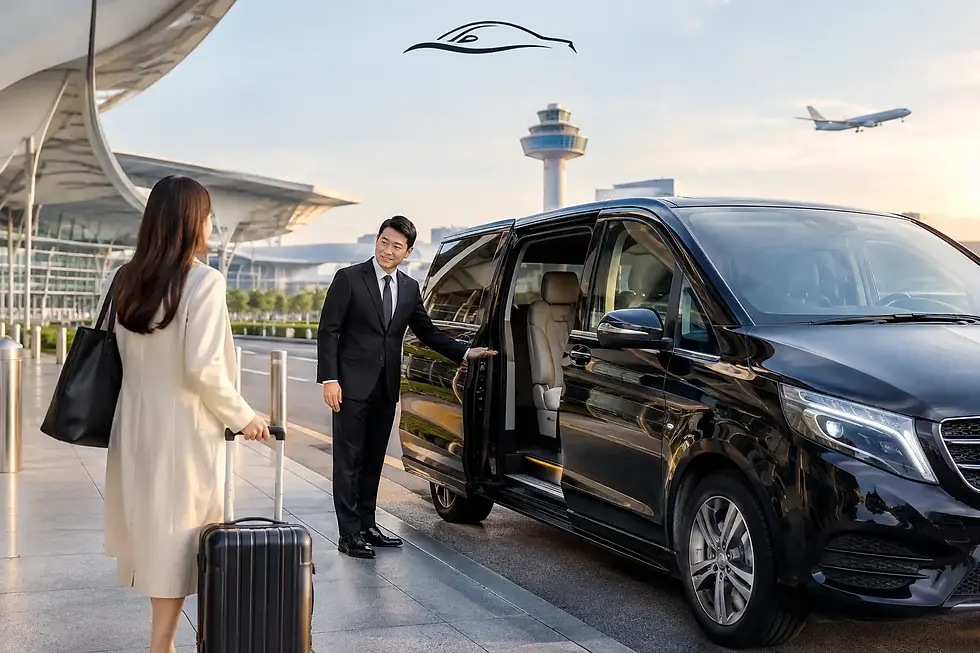
Airport transfers often set the tone for the entire stay. For arrivals, confirm the flight number, scheduled landing time, terminal, passenger name, mobile contact, hotel destination, and number of bags. Flight number information is especially useful because aircraft can arrive early, late, or at a different gate than expected.
A sedan may be suitable for one or two travelers with light luggage. An executive MPV provides more flexibility for a small family, colleagues traveling together, or guests carrying multiple suitcases. For delegates, production teams, and larger family groups, a luxury van or coach may be the more practical choice.
For departures, work backward from the airline's recommended arrival time, then account for the hotel's location, likely traffic conditions, and the guest's need for breakfast, check-out, or last-minute preparation. A chauffeur arriving five to 10 minutes early is a small operational detail that can prevent a stressful morning.
Business meetings and multi-stop itineraries
A point-to-point transfer works well when the schedule is fixed. However, an hourly charter is usually the better fit for a guest with several meetings, uncertain finish times, or a full day of site visits. It allows the chauffeur to remain available while the guest moves between offices, hotels, restaurants, and venues.
The trade-off is cost versus flexibility. A single transfer may appear less expensive, but repeated individual bookings can become inefficient if meeting times shift. For an executive hosting clients or traveling with a tight agenda, a dedicated chauffeur and vehicle often provide better control of the day.
Provide the chauffeur with the full itinerary in advance where possible. Include venue names, complete addresses, preferred arrival times, principal contacts, and any notes about entrance locations. Large commercial buildings and event venues may have different drop-off zones, so precise information saves time at the curb.
Events, weddings, and group movements
Event transport needs more than a list of pickup times. It needs a plan for passenger flow. Consider whether guests will arrive together or in waves, whether they need return transfers, and whether a holding area is available for vehicles between movements.
For weddings, the transport plan should account for photo schedules, attire, elderly relatives, and backup time between locations. For corporate events, identify VIP guests, speakers, and delegates whose arrivals affect the program. Coaches and vans can be highly efficient for groups, while sedans and executive MPVs can be reserved for senior leaders or guests requiring more privacy.
A written run sheet is valuable for any event with multiple vehicles. It should identify each vehicle, chauffeur, passenger group, pickup point, destination, and primary coordinator. This does not need to be complicated, but it must be current. Last-minute changes are manageable when there is one accurate source of information.
How to Choose the Right Vehicle
Vehicle selection should reflect the journey, not just the passenger count. A luxury sedan creates the right setting for an individual executive transfer or a couple heading to a formal dinner. An executive MPV balances premium comfort with additional seating and luggage room. Luxury vans suit small groups that want to travel together without compromising on personal space.
For larger delegations, coaches simplify logistics and reduce the risk of people arriving at different times. Standard passenger vehicles may be appropriate for practical transfers when a premium vehicle is not necessary, especially when coordinating several guests across different schedules.
Ask a few essential questions before confirming the booking: How many passengers are traveling? How much luggage will they carry? Is the journey direct, or will there be several stops? Are there mobility considerations, formal attire, or equipment cases to accommodate? Will the guest need the vehicle to wait?
The answers often change the recommendation. For example, three travelers may technically fit in a sedan, but three large suitcases could make an MPV the far better choice. Choosing correctly at the start is a mark of hospitality, not an upsell.
Details That Prevent Last-Minute Problems
Transport issues usually come from missing information rather than difficult logistics. Confirm the guest's preferred name and mobile number, but handle personal data with care. Verify the hotel entrance, especially if the property has multiple driveways or separate tower lobbies. For international guests, share clear meeting instructions in advance so they know what to expect after landing.
It is also wise to establish a change process. Guests may be delayed in immigration, a meeting may run over, or a flight may be canceled. The concierge, coordinator, and transport provider should know who has authority to adjust the service and how updates will be communicated. A direct, responsive operations contact is more valuable than a generic booking confirmation when timing is sensitive.
For cross-border journeys to Malaysia, planning needs additional attention. Border procedures, travel documentation, passenger details, and realistic travel buffers should be considered before departure. These trips are best booked early, particularly for business travel or time-bound appointments, because an optimistic schedule can quickly become an inconvenient one.
What to Expect From a Professional Chauffeur
A chauffeur is more than a driver assigned to a route. The role includes presentation, local awareness, safe driving, and situational judgment. Guests should be greeted courteously, assisted with luggage, and given a comfortable, orderly environment for the journey.
A hospitality-minded chauffeur also understands when to be proactive. If a guest is unfamiliar with the city, helpful guidance on travel time and arrival procedures can reduce uncertainty. If the guest prefers quiet, the chauffeur respects that immediately. This is the standard behind the idea of a butler on wheels: attentive support without unnecessary attention.
Limo2Go supports this level of service with chauffeur-led private transport for airport transfers, business travel, events, and customized itineraries. The value is not only in the vehicle category. It is in having a team prepared to coordinate the details that guests should not have to think about.
When arranging the next transfer, focus on the moment that matters most: the guest stepping out of the vehicle on time, comfortable, and ready for what comes next.


Comments