
Best Transport for Wedding Guests That Keeps Plans Smooth
- 9 hours ago
- 5 min read
A wedding schedule can be perfectly planned on paper, then unravel when guests are stuck in separate cars, hunting for a pickup point, or arriving after the first toast. The best transport for wedding guests is the option that removes those small but consequential uncertainties, giving everyone a clear, comfortable way to get from one moment of the day to the next.
For most weddings, the right choice is not simply the largest vehicle or the lowest per-person rate. It is a transport plan matched to your guest profile, venue access, timeline, and level of hospitality. A well-managed charter lets the couple focus on their celebration while guests feel looked after from arrival through departure.
Start with the journey, not the vehicle
Before choosing a sedan, van, minibus, or coach, map the guest journey. Where are people starting? Is the ceremony in a different location from the reception? Will guests need transport from hotels, a designated meeting point, or their homes? And after the reception, are they likely to leave at the same time?
These answers shape the service far more effectively than guest count alone. A 120-person wedding may need only a few executive MPVs if most attendees are local and driving independently. A 60-person destination-style celebration may need several coordinated coach transfers if guests are staying at the same hotel and the venue has limited parking.
Also consider the parts of the day when timing matters most. Guest arrivals should be complete at least 20 to 30 minutes before the ceremony begins. For a reception that ends late, the priority shifts from early arrival to safe, reliable departures. Transport should support the pace of the celebration, rather than force guests to watch the clock.
The best transport for wedding guests by group type
Different vehicles solve different problems. The strongest plan often combines two or more options rather than putting every guest in one large vehicle.
Coaches and minibuses for shared transfers
A coach or minibus is often the most practical choice for guests traveling together between a hotel, ceremony, and reception. It creates one clear pickup instruction, reduces the number of cars arriving at the venue, and helps the wedding party keep the schedule moving.
This works especially well when parking is restricted, the route is unfamiliar, or alcohol will be served at the reception. In Singapore, where event venues can have tightly managed drop-off points and traffic conditions can change quickly, shared transport also makes arrivals more predictable.
The trade-off is flexibility. A coach runs on a schedule, so it may not suit guests with young children, early commitments, or separate travel plans. The solution is often simple: operate a main shared transfer for the majority, then provide a smaller vehicle or private-car option for guests who need it.
Luxury vans and executive MPVs for families and VIPs
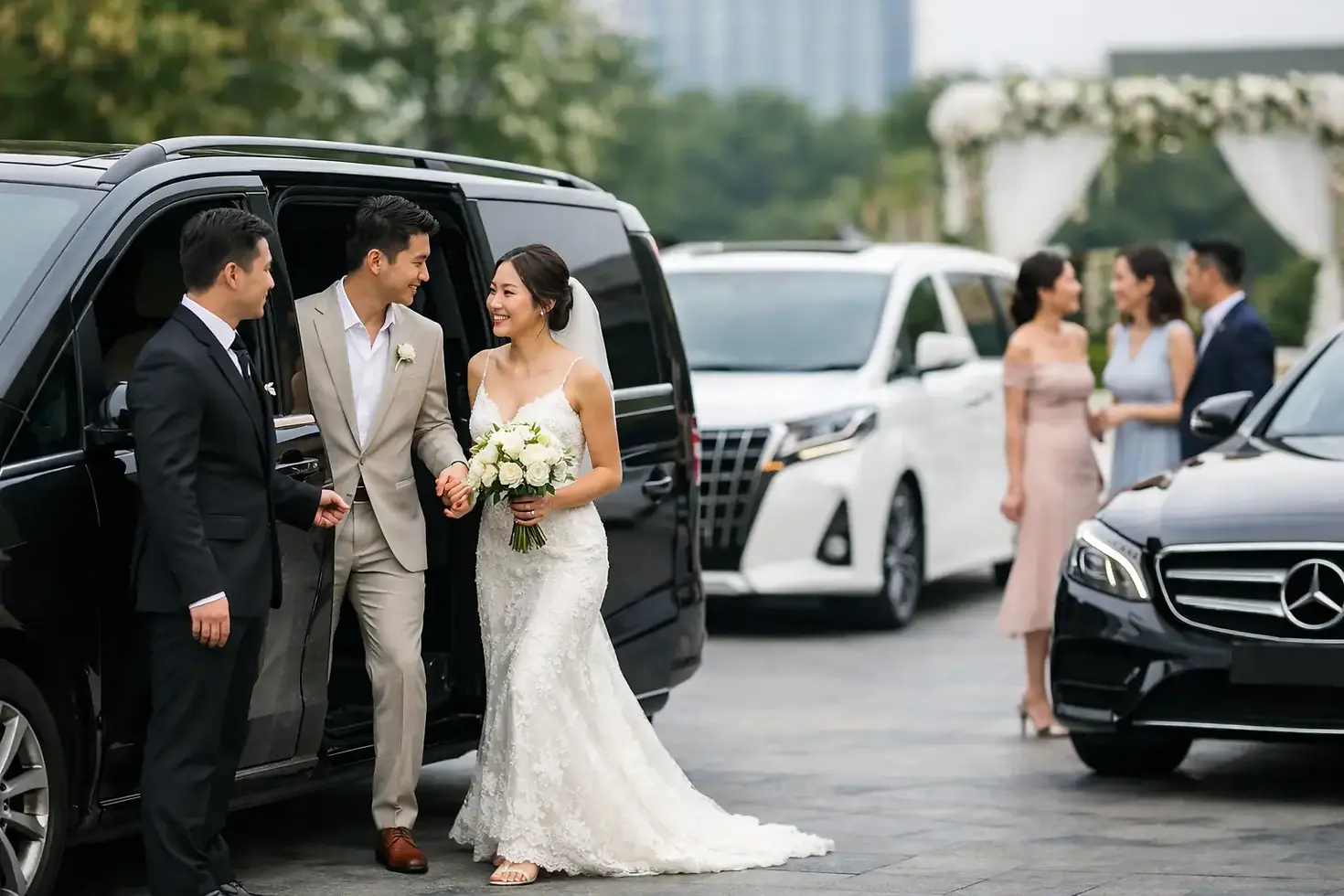
Luxury vans and executive MPVs are ideal for smaller groups that should travel together but value privacy and comfort. Think immediate family, elderly relatives, overseas guests, speakers, or a bridal party moving between hair and makeup, photography, and the venue.
These vehicles offer a more personal experience than a large coach while still accommodating luggage, gifts, mobility aids, or children’s essentials. They are also useful when venues have narrow driveways or loading zones that cannot easily accommodate full-size coaches.
For VIP guests, a chauffeur-driven MPV signals thoughtful hospitality without making the arrangement feel overly formal. It gives them a direct point of contact, assistance at pickup, and a calm space between wedding events.
Private sedans for individual guest care
A private sedan is the right fit when a guest’s comfort or privacy deserves special attention. This can include senior relatives, key business guests, a parent traveling alone, or someone arriving directly from the airport.
Sedans are also a practical backup when a guest has an unconventional schedule. Rather than asking them to wait hours for a shared shuttle or arrange unfamiliar local transportation, a reserved chauffeur provides a dependable, door-to-door solution.
Private cars cost more per passenger than group transport, so they are best used selectively. Their value is in solving high-priority needs gracefully, not in replacing every shared transfer.
Build a schedule with breathing room
The most common transport mistake is planning for ideal travel times. Wedding-day movements include more than driving: guests need time to gather, board, disembark, find the entrance, and settle into their seats. Older guests may need a little longer, while large groups always take longer than expected to board.
Build a pickup window rather than a single last-minute departure time. For a hotel-to-venue transfer, guests can be asked to assemble 15 minutes before the vehicle leaves. The vehicle should then arrive at the venue with time for a relaxed walk to the ceremony area.
For return trips, avoid offering just one coach immediately after the final song. Some guests will leave early, while others will want to stay for photographs or a final conversation. Two or three scheduled departure waves are often more guest-friendly. If the budget allows, keep one vehicle on standby for a limited period, especially when the venue is remote or ride-hailing availability may be inconsistent.
Make instructions impossible to misread
Even an excellent fleet cannot compensate for unclear information. Guests need one simple message that answers five questions: where to meet, what time to arrive, what vehicle to look for, who to contact, and what happens if they miss the departure.
Send transport details with the wedding itinerary a few days ahead, then repeat the essential information on the morning of the event. For larger weddings, a designated transport coordinator is invaluable. This person can confirm passenger counts, guide guests to the pickup area, and communicate with chauffeurs without involving the couple.
Keep the language specific. “Shuttle from the hotel lobby at 3:30 p.m.” is useful. “Transport will be available in the afternoon” is not. If guests are divided across different vehicles, identify each group by hotel, family name, or pickup time rather than making people guess where they belong.
Plan for accessibility, weather, and the final mile
Guest comfort is often decided by details that look minor during planning. Confirm whether any guests use wheelchairs, walkers, or require low-step access. Ask about room for folding mobility aids and whether the venue has a convenient, sheltered drop-off area.
Weather deserves the same attention. Rain can slow boarding, disrupt outdoor pickup points, and make the walk from vehicle to venue uncomfortable. Covered pickup areas, umbrellas, and a chauffeur who can assist with door-to-door movement make a genuine difference, particularly for formalwear and elderly guests.
Then consider the final mile. A vehicle may be able to reach the venue entrance, but it may not be allowed to wait there. Confirm coach bays, turning space, drop-off restrictions, and the exact pickup location for the return journey. This is where experienced event transportation planning prevents guests from standing in the wrong place at the end of a long evening.
Choose a provider that manages, not merely drives
Wedding transportation is a live operation. A delayed ceremony, unexpected rain, or a guest who needs to leave early can change the plan in minutes. Choose a provider that can coordinate multiple vehicles, monitor the schedule, communicate clearly, and adapt without creating more work for the couple or planner.
Ask whether the provider can assign a consistent point of contact, manage staggered pickups, accommodate luggage or décor where needed, and provide suitable vehicles for different guest groups. Professional chauffeurs matter too. They should arrive prepared, assist courteously, and understand that a wedding transfer is part of the guest experience, not just a trip between addresses.
Limo2Go approaches wedding transport with that hospitality mindset, pairing punctual chauffeurs with a fleet that can support intimate family transfers, VIP journeys, and larger group movements. The goal is simple: every guest should feel expected, comfortable, and in good hands.
The best choice is the one that lets your guests arrive relaxed, celebrate freely, and leave safely, with no one wondering where they need to be next. That peace of mind is a quiet form of wedding hospitality, and guests will remember it long after the last ride home.


Comments